
By Xavier Smalls ’25
Majors: Anthropology, Environmental Studies; Minor: Museum, Field, and Community Education
Contributor Biography: The author is an aspiring cultural and environmental anthropologist with interests in music, nature, writing, and the nexus between environmental injustices and human cultures.
Brief Description: This work of writing explores the actions of two people groups along the Eastern Shore through an analysis combining archaeology and philosophy to understand differences in oyster depletion vs. conservation through the “Tragedy of the Commons.” From research and excavational and laboratory work at two archaeological sites known as Chapel Branch (1200 B.C. to A.D. 1600) and Barwick’s Ordinary (18th century), I argue that contrasting motives of the Native Americans at Chapel Branch and the European settlers at Barwick’s Ordinary allowed them to treat oysters differently due to diverse worldviews; the former focusing on conservation, traditional ecological knowledge, and being one with nature, and the latter focused on depletion and economic gain. Finally, I connect the actions of the European settlers at Barwick’s Ordinary to the Tragedy of the Commons in a way of explaining how overexploitation of oyster populations during this time started the rapid downfall of oyster populations, and why we should adopt similar philosophies and worldviews to those of the Native Americans as a whole.
The following was written for ANT 194: Archaeology Lab
As both climate change and global warming are issues that are more prevalent as life exists amid a sixth mass extinction, it is important, and has been important, for all humans on planet Earth to cautiously monitor the use of “the commons” and resources that are usually taken for granted. This even includes past humans, such as Native Americans and European settlers, who we learn about through archaeological excavation and historical research. These morally obligated actions are important due to potential depletion of overused resources, overpopulation, consumption, and the presence of both carbon and greenhouse gas emissions, especially in developed nations. According to well-known ecological, biological, and environmental philosopher Garrett Hardin, the overpopulation problem has “no technical solution, but requires a fundamental extension in morality” and relates to the tragedy of the commons, which occurs when humans put personal gain over communal health (Hardin 1, 4-5). Uniquely applying this philosophical definition of tragedy of the commons to archaeological fieldwork, I am interested in answering the following questions of the 18th century European settlers of Barwick’s Ordinary and Native Americans of Chapel Branch (1200 B.C. to A.D. 1600): How did morals surrounding animals and the environment impact limit use and/or overuse of oysters along the Eastern Shore; and how do their actions explain realities nowadays, such as oyster depletion along the Eastern Shore? Although these particular Native American and European settlers existed from 200 to 3200 years ago, it is vitally important to investigate if differences in environments, natural resources, cultural traditions, and morals between the two people groups diversely shaped their actions regarding the oyster populations along the Eastern shore and the Chesapeake Bay, through archaeological findings and background, historical research, to explain why oysters are depleted in the present time.
The tragedy of the commons refers to the situational action in which individuals repeatedly use resources from the “commons” without thinking about the societal or communal strain that individual, depletive actions produce. Nevertheless, individuals begin to become aware of the negative implications of their actions on the “commons” when the resource’s depletion becomes more noticeable (Hardin 1-2). From Hardin’s writing, which primarily focuses on the moral issue of overpopulation, population is one of many instances pertaining to the treatment of planet Earth as a “common” which will lead to collective ruin. From Hardin’s example, it is apparent that other examples of “commons” exist, such as aquatic and terrestrial environments, the atmosphere, old growth forests, and wildlife, to name a few. Hardin ends his writing by providing the satisfactory solution of “mutual coercion mutually agreed upon” to explain how overpopulation, and other tragedies of the commons, might be capable of being solved through the community realizing that restrictions on the “commons” are vital for the continuation of life on Earth. One example of a “common” that I will be closely looking at through historical research and archaeological field work pertaining to Native Americans and European settlers, and is important to environmentalists, watermen, philosophers, and many humans who call the Eastern shore home, is the oyster population, which has been impacted by both the Native Americans at Chapel Branch and the European settlers at Barwick’s Ordinary in different ways based on diverse morals and environmental pressures.
All the way back to the Paleo-Indian period, Native Americans cultivated food and used their natural resources for dietary sustenance while also partially relying on animals for food. Native Americans did not consume oysters until the late Archaic period, which checks out to be around 2500 years ago (Richard). While Native Americans used oysters and other animals and plants for food, they “did not take more from the environment than they needed,” which consistently is the case with Native American activity at Chapel Branch East and West. From Chapel Branch (18CA270), a primarily Native American site in Denton, Maryland dating from 1200 B.C. to A.D. 1600, Native Americans did not use too many oysters during the almost three thousand years due to an exceedingly small number of excavated oysters during excavation of the site during May-June 2023. While some faunal artifacts such as charcoal and fragments of bones were discovered at Chapel Branch, the site lacks a supply of oysters and faunal material in general, which is quite the opposite to Barwick’s. Although the Native Americans that lived along the Chesapeake Bay, including Chapel Branch, did not necessarily practice contemporary conservation techniques due to a lack of technological advancements, those techniques were not necessary since the Native Americans cautiously used resources and had small population sizes. The Native Americans, around this time, were quite diligent and careful about how they harvested and forested plants because they heavily valued their close relationship with the natural world as they viewed themselves as “part of nature’s beauty” rather than “more important than nature” (Miller). Due to their beliefs, relationship with nature, and traditional ecological knowledge, the Native Americans had an insignificant effect on the pollutants and sediment entering into the Chesapeake Bay, unlike the European settlers along the Eastern Shore (Influences on Aquatic Resources).
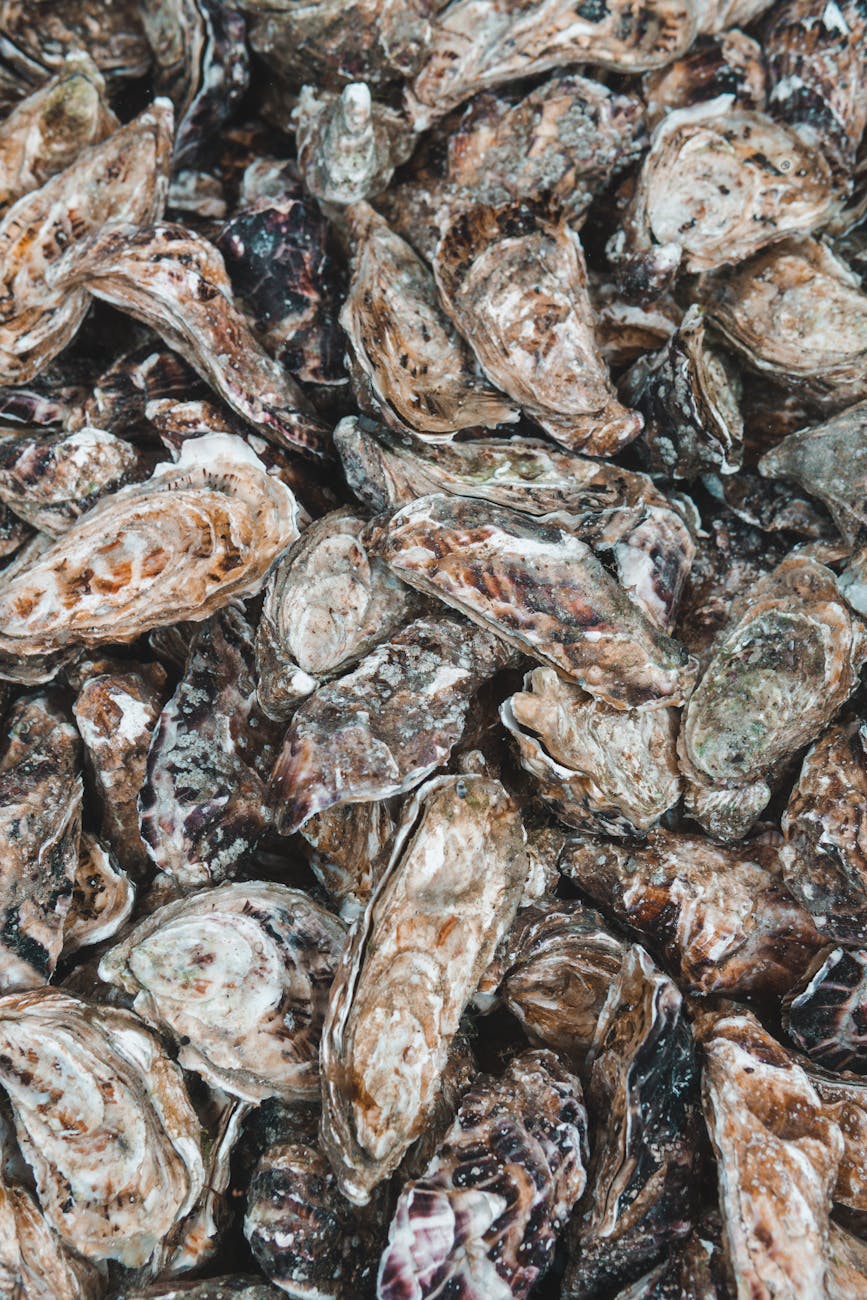
Another archaeological site in Denton, Maryland provides another story which contains people who have diverse cultural and environmental relationships to nature and environmental surroundings. Barwick’s Ordinary, the 18th century tavern site, is home to a fair number of excavated oysters, both hinged and unhinged. Many excavated lots from Barwick’s Ordinary (18CA261) contain oyster shells, which further shows how oyster tragedy of the commons may be the reason for today’s oyster depletion in the Chesapeake Bay. While the Native Americans had a mutual relationship with nature, fauna, and flora, the European settlers during the 18th century had a depletive relationship with both flora and fauna, including oysters, along the Eastern Shore, as they heavily relied on them for economic gain, dietary pleasure, sustenance, and pastimes such as fishing and consumption. Furthermore, technological improvements and advancements allowed the Chesapeake Bay to become a major fishing and harvesting center during the late 18th and 19th centuries, which can be viewed as the start of the oyster tragedy of the commons along the Eastern Shore, specifically in the Chesapeake Bay. Due to an apparent “species centric” nature regarding oyster use, anthropogenic actions of European settlers and humans along the Eastern Shore were the catalyst for decreases in the oyster population and the decrease in the Chesapeake Bay’s regional, organismal, and environmental diversities as a result of overharvesting and the disruption of oyster beds. European settlers had a monumental impact on the introduction of pollutants and sediment into the Chesapeake Bay due to fishing and farming, which has caused eutrophication and a decrease in the Chesapeake Bay’s community diversity (Influences on Aquatic Resources). While present efforts are being made to rejuvenate the number of oysters in the Chesapeake Bay, numbers will never be the same due to past ecological disruptions of aquatic environments which have caused hysteresis.
From environmental and cultural differences of the 18th century European settlers at Barwick’s Ordinary and the Native Americans at Chapel Branch, it is apparent that tragedy of the commons of oysters existed much more heavily at Barwick’s Ordinary than at the Chapel Branch site. While the Native Americans surely depleted some aquatic life during their stay at Chapel Branch and at other sites along the Eastern Shore to respond to hunger and sustenance, the European settlers greatly decimated the oyster population compared to the Native Americans by not thinking about the negative environmental and societal implications of their actions, leading to the rather unfortunate tragedy of the commons of oysters. In addition, speciesism, which is prejudice or unjustified bias that favors one’s own species over every other, allowed the European settlers and oyster harvesters along the Chesapeake Bay to deplete the oyster population along the Eastern Shore, resulting in overharvesting, pollution, and disease as negative effects of the tragedy of the commons. On the other hand, the Native Americans viewed nature’s beauty as limited rather than limitless, which caused them to solely use resources to the amount of necessity due to their uniquely intriguing traditional ecological knowledge and close communication with their many Gods of nature. In other words, moral standards and cultural beliefs of the Native Americans at Chapel Branch and other sites along the Eastern shore prohibited them from treating the oysters as a “common” for personal gain, which is a necessarily important takeaway for today’s society. As more tragedies of the commons arise amid climatic changes, it is important to remember how answers for many environmental and anthropogenic occurrences can be discovered through lessons and stories from the fields of archaeology and anthropology, as there are still more stories to discover since the pursuit of archaeological study is a never-ending process. These stories can be viewed as gateways for learning mysteries and human histories pertaining to both past and present behaviors, diverse cultural differences, anthropogenic impacts, and lifestyles of Homo sapiens, as they are all part of the human story.
Works Cited
“Hardin.” “G. Hardin ‘Tragedy of the Commons.’” Log In to Canvas, PHL 102: Contemporary Moral Issues- washcoll.instructure.com/login/ldap. Accessed 2 Nov. 2023.
“Influences on Aquatic Resources.” Discovering the Chesapeake: The History of an Ecosystem, edited by Philip Curtin, Grace Brush and George Fisher. Johns Hopkins University Press (2001).
“Miller.” “Living along the Great Shellfish Bay.” Discovering the Chesapeake: The History of an Ecosystem, edited by Philip Curtin, Grace Brush and George Fisher. Johns Hopkins University Press (2001).
“Richard.” “Woodland Period.” Dent Richard, Chesapeake Prehistory: Old Traditions, New Directions. Springer (1995).
 Washington College Review
Xavier this article was very informative and well written. Very proud of your work, Love you Aunt Neet and Uncle Phillip.
LikeLike